Iacobus Maris Route
A dreamlike journey
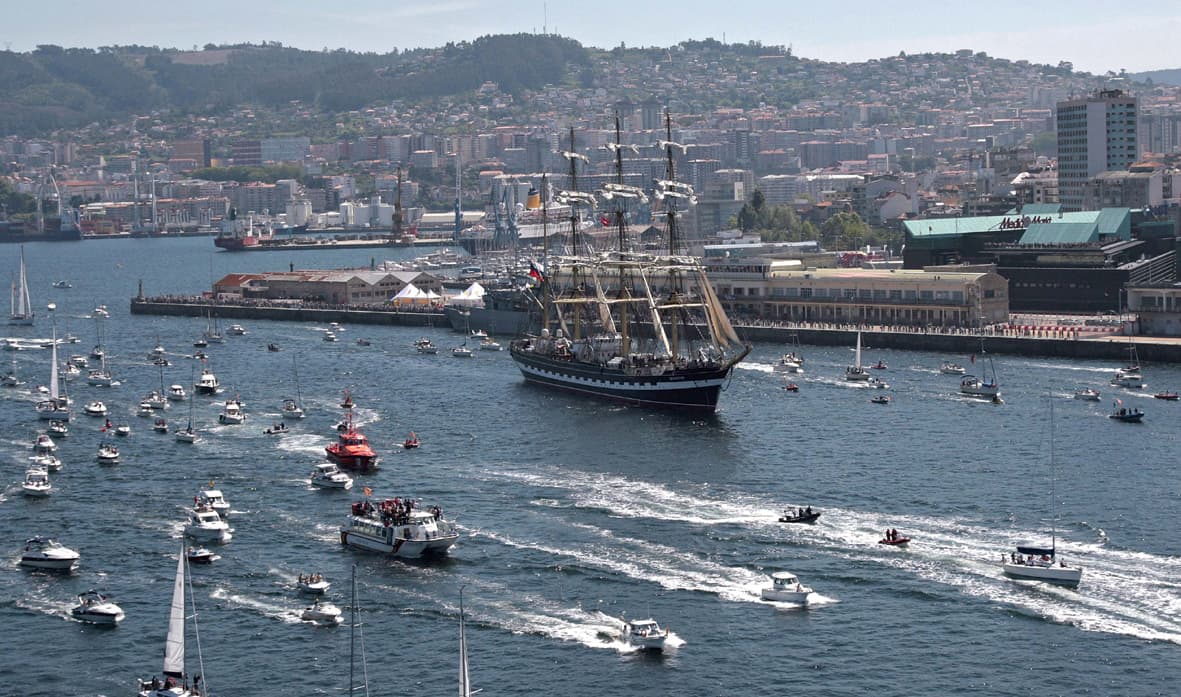
The longest Xacobean maritime pilgrimage in history.
The Iacobus Maris Route 2022 consisted of four weeks of navigation between June and July 2022, coinciding with the Holy Year, visiting cities rich in history. It departed from the Italian port of Genoa, with stops in Valencia, Seville (Spain), and Porto (Portugal), ending the maritime leg in Vigo (Spain).
Finally, and in order to obtain the nautical pilgrim credential, the Compostela, a day was devoted to a pilgrimage to Santiago de Compostela and its ancient Cathedral. Initially planned, the route from Israel was cancelled for navigation safety reasons.
The legend
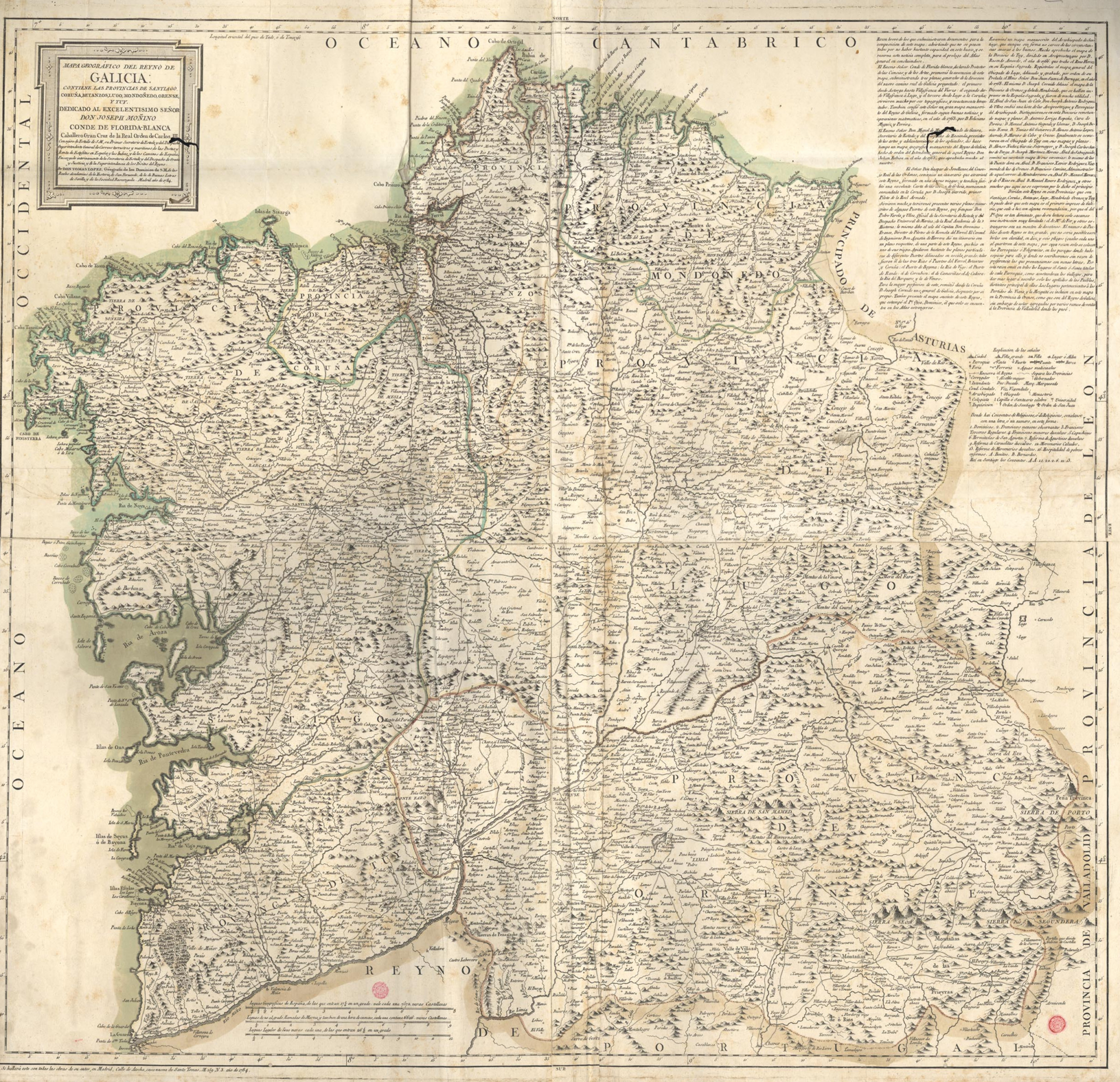
When they were bringing to Galicia the Body of the Apostle Santiago “…after passing Portugal, already on the coasts of Galicia, in a place called Bouzas, which is opposite the Islands of Baiona, a wedding was being celebrated between a beautiful lady and a gentleman. Young people from very important and distinguished families.
The groom’s family came from Amaia, in the Kingdom of Galicia. He was the son of Queen Claudia Lupa, daughter of Gaius Julius Caesar and his first wife Cornelia, whom he left in Spain during his second visit.
His father was Lobo Lobesio, Lord of the castle of Lupario near Padrón, and whom Emperor Augustus made Ruler of Galicia.
The son of both, Lobesio Rivano, was celebrating his wedding with Caya Valeria, daughter of Caya Lobia and Puctonio Marcelo, in the beautiful place called Bouzas, located in the middle of the Ría de Vigo, right opposite the Baiona Islands, which was the place chosen to hold the wedding.
One of the entertainments at the wedding, in addition to music, dances and jousts, was competing in various games such as “abofardar”, a game in which the lords, mounted on horseback, threw their canes, bofardas or lances into the air, having to catch them at a gallop on their horses before they fell to the ground.
When it was the groom’s turn, he threw his bofarda and, while waiting for it to fall, he saw how the wind suddenly changed its trajectory, sending it toward the estuary. The knight spurred his horse so as not to lose the lance in the sea and, in his desperate attempt, what he ultimately achieved was sinking into the water with his horse and disappearing.
As time passed and everyone’s despair grew, they saw a luminous boat approaching, heading toward the point where the groom and his horse had disappeared.
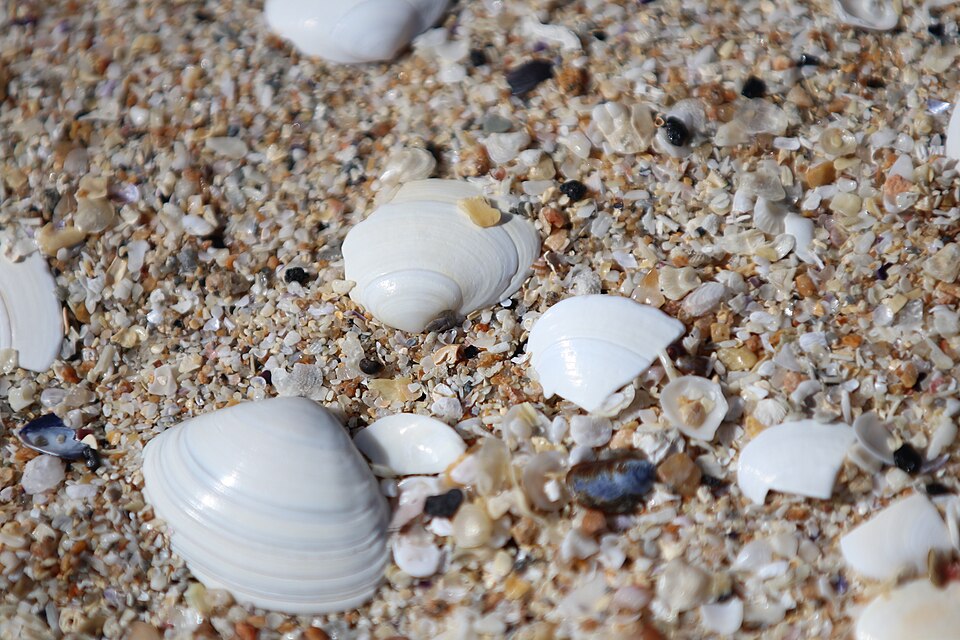
When everyone had already given him up for dead, the great miracle happened! As the luminous boat passed, the knight miraculously emerged from the waters with his clothes and horse covered in scallop shells.
Stunned and confused by what had happened, the knight turned his gaze toward the crew of the vessel, who, moved with emotion, raised their eyes to the sky exclaiming:
“-Truly does Jesus Christ wish to manifest His power before you and those who are in this land, for the good and honor of this, His vassal, whom we carry in this vessel to give him Christian burial. Our Lord Jesus Christ wished to show through you, to those present and to those yet to come, that those who wish to love and serve this His vassal must visit him wherever he may be buried, carrying shells like those with which you are covered, as a seal of privilege. He, in return, will grant them that on the Day of Judgment they shall be recognized by God as His vassals, and, for the honor they have shown to His vassal and friend James by visiting and venerating him, He will raise them up in His Holy Glory and Paradise.”
After listening to the disciples, the knight asked to be baptized and returned to the beach where he was reunited with his fiancée and told those present what had happened.
The scallop shell had been established as the symbol of the pilgrim.
Collaborators